


Papayo Amarillo - Colombia
Papayo Amarillo - Colombia
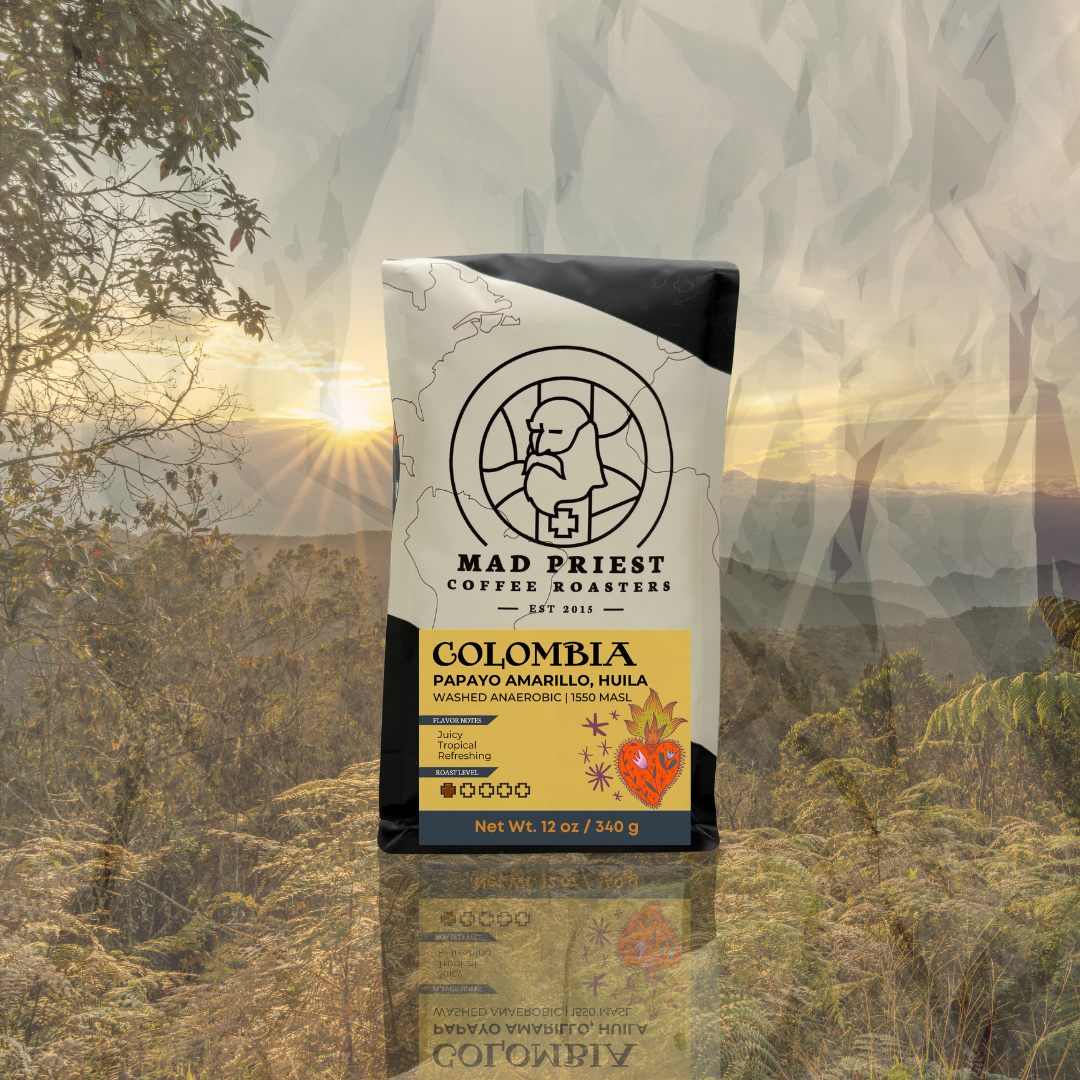
A light roast, anaerobic-processed coffee from Finca Buenos Aires Nuevo in Huila, Colombia. Papaya, tropical fruit, and honeyed sweetness from a farmer who's spent decades perfecting exactly this.
Save up to 15% on 2lb and 5lb bags!

The Divine Details
The Sensory Sacraments
No Investors. No Inheritance. Just Beto.
Beto started farming coffee at 13 years old. Not as a hobby, not as a school project, he managed a plot his mother trusted him with, bought more trees with what he earned, and parcel by parcel, with no formal education and no safety net, built something worth being proud of. He eventually bought his uncle's farm outright. No investors. No inheritance. Just a kid who decided coffee was worth the work and never stopped believing it.
In 2015, Beto entered the Yara Championship of Huila and took second place. That moment changed something. He realized he didn't just want to grow coffee, he wanted to grow exceptional coffee. He joined the Guacharos group shortly after, reconnecting with leader Edilma Piedrahita from a previous association, and found a community that matched his ambitions.
The farm we're sourcing from, Finca Buenos Aires Nuevo (he sold the original farm and named the new one the same thing, which is exactly the kind of move we respect), sits at 1,550 masl in the highlands of Huila. He's planted pink bourbon, bourbon sidra, ombligón, F6, cenicafé, and red caturra across four hectares, shaded by 400 cachingo trees that drop leaves rich in organic matter and protect the coffee from heat, a lesson last summer's brutal temperatures drove home hard. Orange and lemon trees round out the canopy. This isn't accidental biodiversity, it's intentional stewardship.
This lot in particular gets a shorter cherry fermentation than his pink bourbon, 36 hours instead of longer, because Beto's found the papayo amarillo variety carries more natural sweetness and needs less time for the sugars to break down. After de-pulping, the coffee ferments again for 48 hours in sealed bags inside plastic barrels, then goes through a thermal shock wash with hot water at 45 to 50 degrees Celsius, a technique Beto says seals the seed and locks the sugars in. This is not a farmer following a recipe. This is someone who has spent decades learning exactly what each decision does to what ends up in your cup.
Our trader partner Shared Source paid 4,350,000 Colombian pesos per carga directly to Beto for this lot, transferred straight to the association upon receipt at the mill, no middlemen taking a cut. You know what you paid. Beto knows what he received. That's the whole point.